We all benefit from the discoveries of Space Medicine. What will the new car offer?
European scientists are developing a special machine that astronauts who will live in space can train in a few years.
The new tool is called E4D. There is this folding extensions provides opportunities for various exercises. It will spread to Earth, just as it has with countless other technologies developed for space that we use today (such as the drill driver, velcro, the LASIK laser for myopia, etc.).
The machine is being developed for astronauts who will live and work on the Gateway Space Station in orbit around the Moon in a few years.
“Exercises in space are developing. Physiotherapists and specialist trainers who guide astronauts are constantly enriching their knowledge with what we have learned from space. And this knowledge is transferred to gymnastics and rehabilitation medicine on earth”, FM Agency reports. Mr. Adrianos Golemis, European Space Agency (ESA) Astronaut Physician and the first Greek to succeed in the European selection of young astronauts.
As he explained, the E4D fitness device could make a difference in the health of people on Earth and the Moon. “Its advantage is that in a small space, it can provide the opportunity for many different fitness exercises with its foldable extensions,” he said.
For the first time, rowing and rope pulling can be done on the same machine. It can also work all the muscle groups “at risk from the conditions in space,” Mr Golemis explained.
We all benefit
E4D is also a classic example of the economic benefits of human presence in Space. That’s because it’s produced by DAC, a relatively small Danish company that won a competition to make it on open terms.
“The company started in the space training and space medicine space, with small payloads in the era of the space shuttle and the old Mir station. It now manages multi-million euro contracts to develop such innovative technology in humanity’s new journey to the moon. But what is important is that every technological achievement is commercialized and implemented on Earth. This way we all benefit. Maybe in a few years we’ll be practicing at home with a foldable multi-purpose tool from E4D,” Mr. Golemis noted.
New health knowledge from space
Since 2000, humanity has had a permanent presence in space with crews of astronauts orbiting the International Space Station (ISS). The main purpose of astronauts is research. But things are never simple, when the human body is in reduced gravity.
“In orbit around the Earth, we are constantly discovering new knowledge. “Space is the only place where we can study Medicine, Physics, Chemistry, Materials Science, Biology and other sciences without the influence of gravity,” said Mr. Golemis.
Astronauts in orbit are in a state of perpetual “free fall.” Even from the way we live and what we should pay attention to, valuable knowledge can be extracted to improve everyday life on Earth.
It is such an example maintaining muscle mass of astronauts on long-duration missions. “We know from the first decades of space exploration that the human musculoskeletal system atrophies. This mainly seen in the muscles of the back and lower limbsbecause they are not used at all. This problem will become even more important for crews on long-duration missions to the surface of the Moon and trips to Mars in the distant future,” he said.
Expected loss of muscle mass in astronauts if no action is taken it can reach 50% in specific muscle groups. How is the indicator gastrocnemius circumference decreases by 10-30% on long missions.
Systematic training without weights
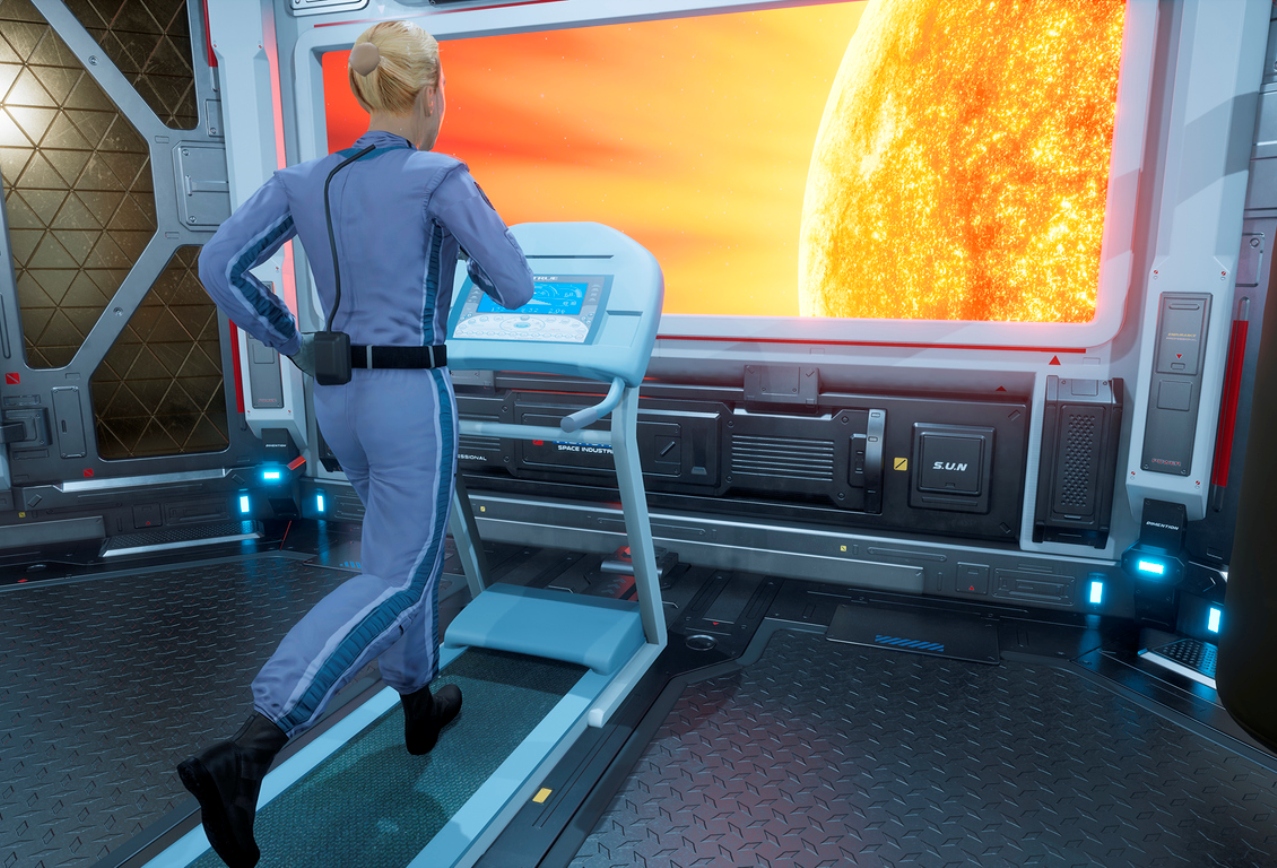
To prevent this, astronauts train five times a week in space for 1.5-2 hours. Already three fitness tools were developed years of testing and organizing weight versus the effects of weightlessness:
- A runway called T2 that they shut down so the astronauts could escape. The resistance of this belt is equal to 60% of their weight on Earth.
- CEVIS stationary bike
- The ARED machine, where astronauts train using their muscles against resistance
“Such lessons apply to many technologies on Earth’s surface,” the Greek doctor added. And he expressed his confidence that we will constantly see the fruits of the development of space research “in our lives today and in the future.”