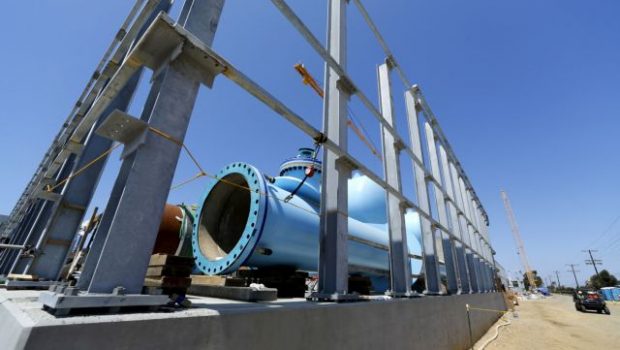
Spain is already investing heavily in the construction of water desalination plants that produce 227 million liters of fresh water per day, which is a champion not only in Europe but also in the world for the relevant technology.
In recent years, the main problems caused by water shortages, which began to intensify their appearance in Europe and especially in Southern Europe, including Greece, prompted the country to take action.
According to new figures from the New York Times (NYT), nearly 100 large desalination plants have now been built in Spain, making the country a pioneer in Europe and one of the strongest forces in the world in this technology.
It’s a practice that more and more countries around the world, from Australia to China to Israel, are adopting to meet their freshwater needs.
The desalination plant in Torrevieja, Spain alone can provide clean water to 1.6 million people, according to the manufacturer Acciona.
The highest demand for households and visitors is expected in the summer, while at other times large amounts of this water are used to irrigate oranges, lemons and other crops.
The Spanish government subsidizes much of the cost of desalination, with farmers saying they pay about 45 euro cents per cubic meter of water. Madrid recently announced the allocation of 90 million euros for the further expansion of this special unit.
The total cost of this expansion is expected to reach 200 million euros. The desalination plant in Torrevieja is the largest in Europe.
The need for access to water is increasing
Global Water Intelligence, which monitors the water sector around the world, estimates that about 500 million people rely on partially or fully desalinated water today, and that number could increase sixfold to 3 billion by mid-century, the New York Times reports. .
There are 1,500 seawater desalination plants worldwide that can produce several million liters of water per day. About $14 billion is spent annually on building new such facilities and maintaining existing ones.
It requires a large amount of energy
Such desalination technologies require enormous amounts of energy. The operating costs of desalination plants, called reverse osmosis, a technology in plants like the one in Torrevieja, are reduced by using cheap solar energy.
The pioneers of this combination are countries in the Middle East, such as Saudi Arabia, which have the oil revenues and abundant sunshine to finance such large investments. Today, the largest market for such combined technologies is Saudi Arabia, followed by the United Arab Emirates.
Access to purified seawater for various purposes has contributed significantly to the growth of megacities in the United States and Qatar, the NYT reports.
It is indicative of the fact that the leader of the US capital of Abu Dhabi, Sheikh Mohammed bin Zayed al Nahyan, has offered tens of millions of dollars in prizes to those who introduce innovative technologies for this sector.